
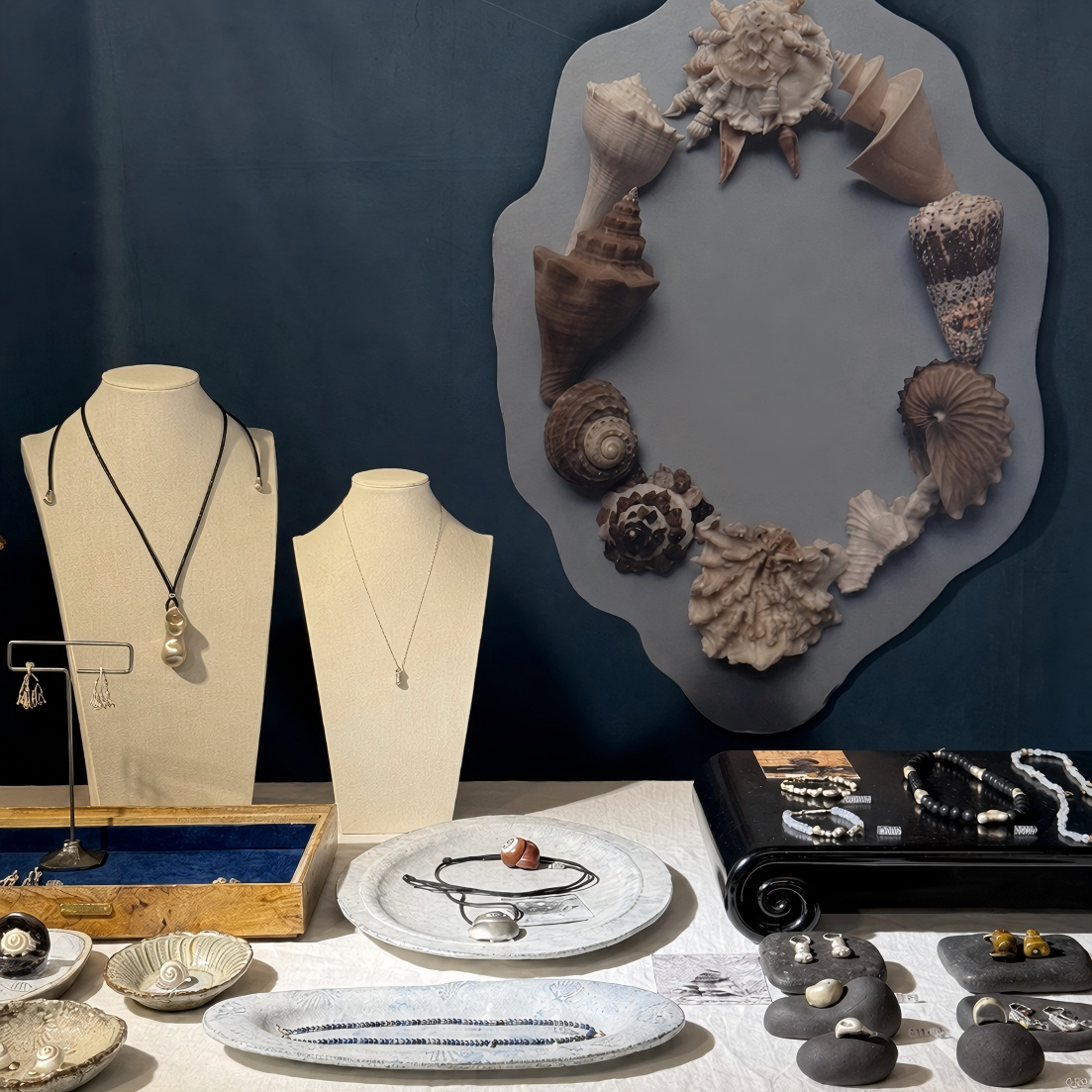
The Language of Texture: Why Handmade Details Make Jewelry Feel Personal
Some accessories are noticed immediately because of their size or color. Others invite a second look because the eye discovers something new each time — a raised line, an irregular edge, a woven surface, an engraved curve or an unexpected combination of materials. Texture introduces depth. It gives a piece dimension beyond its silhouette and allows light to move differently across every surface. That is why vintage-inspired earrings, sculptural forms and textile details can feel so expressive even when their color palette remains restrained. Texture can appear in many forms. Understanding the difference helps you choose jewelry according to the mood you want to create. Fine lines and carved-looking patterns create an archival feeling, especially when paired with botanical, geometric or vintage motifs. Tassels and fine chains introduce motion. Every small movement of the wearer changes the silhouette and creates a softer visual rhythm. Textile details add warmth and an artisanal character, making them particularly effective with relaxed, bohemian and vacation-inspired wardrobes. Three-dimensional silhouettes create a stronger visual presence and can transform even a minimal outfit into something more directional. Vintage style is rarely about looking perfectly new. Its appeal often comes from the impression of history — surfaces that appear touched, forms inspired by old ornament, slightly irregular contours and details that feel as though they were discovered in an antique cabinet. Modern jewelry can borrow this visual language without copying a particular era. A botanical motif can become more contemporary when enlarged. A traditional decorative pattern can feel architectural when simplified. A classic tassel can become unexpected when combined with an asymmetric shape. This balance between familiar and unexpected is one of the reasons statement earrings work so well within personal style. They can reference the past while still feeling completely relevant to the present. “Texture gives the eye a reason to stay.” When choosing a textured earring, look beyond the first impression. Ask yourself what happens when you move closer. Are there engraved lines? Overlapping layers? Open spaces? Contrasting surfaces? A small amount of complexity can make an accessory feel far more distinctive. Texture does not always have to be something you can touch. It can also be created through movement. Long drops, chains, tassels and layered elements produce a changing silhouette as you walk, turn your head or move through natural light. This is especially important with statement earrings because the accessory is located beside the face. Even a small movement can change the way light catches the piece, creating a subtle sense of animation. For evening occasions, movement becomes especially effective under warm lighting. Instead of relying entirely on sparkle, a moving silhouette can create an equally memorable effect. Perfect symmetry is not the only definition of beauty. An unexpected proportion, an irregular outline or an off-center detail can create a stronger sense of individuality. These small interruptions are often what make an accessory feel designed rather than generic. A highly detailed earring does not require an equally complicated outfit. In fact, some of the most successful combinations rely on contrast: an intricate accessory against a clean shirt, a sculptural silhouette with relaxed denim, or a woven statement piece with an uncomplicated linen dress. If the earrings feature elaborate patterns, let them become the main point of interest. Keep necklaces delicate or skip them entirely. A simple bracelet or ring can provide continuity without competing with the face. You can create cohesion by repeating one material quality elsewhere in the outfit. Woven earrings pair naturally with linen, cotton or raffia textures. Sculptural earrings work beautifully with structured tailoring. Botanical designs can echo natural fabrics or softly draped silhouettes. When an earring is already rich in texture, color does not need to be complicated. Neutral clothing can make the details more visible, while one carefully chosen color accent can create a more eclectic and artistic look. Choose fine engraved lines, delicate openwork or subtle botanical forms. Pair with clean shirts, knitwear and neutral tailoring. Look for floral motifs, flowing drops, delicate curves and soft decorative details. Pair with dresses, skirts, soft blouses and flowing fabrics. Woven surfaces, textile elements, tassels and unexpected color combinations work particularly well. Pair with linen, denim, relaxed silhouettes and natural textures. Choose strong geometric silhouettes, sharp angles and sculptural forms. Pair with monochrome outfits, tailoring and minimal accessories. Explore layered chains, elongated silhouettes, intricate openwork and deeper tones. Pair with black dresses, sleek hairstyles and restrained accessories. There is something special about jewelry that does not reveal everything immediately. Perhaps it is a tiny botanical detail hidden within a larger silhouette, a layered construction that changes from different angles, or a subtle contrast between smooth and textured surfaces. These details create a slower relationship with an accessory. Instead of being something noticed once and forgotten, the piece becomes something you continue to discover each time you wear it. At Lunareth Studio, this sense of discovery is central to the way statement jewelry is imagined. Vintage references, sculptural forms, textile influences and artistic proportions are brought together to create pieces that feel expressive rather than ordinary. The result does not have to fit into one aesthetic category. A single pair can feel romantic with a flowing dress, artistic with tailoring, bohemian on vacation and dramatically different after dark. Jewelry is more than an finishing touch. It can introduce movement, contrast, history, texture and emotion into an otherwise familiar outfit. Whether you are drawn to sculptural geometry, botanical ornament, woven textiles, vintage surfaces or dramatic drops, the most meaningful pieces are often those that reflect the way you see the world. Choose details that make you look twice — and make the look unmistakably your own.
The most interesting jewelry does not look completely predictable.
Four Kinds
of CharacterEngraved
Tasselled
Woven
Sculptural
Why texture makes vintage design feel alive
Look for details that reveal themselves gradually.
Movement is a form of texture

Imperfection can create personality.
How to style textured earrings without overwhelming the outfit
Start with one visual focal point.
Repeat the texture — not necessarily the shape.
Use color as a supporting element.
Match the texture to the mood.
The beauty of a piece that feels discovered
Style begins with the details you choose to notice.